


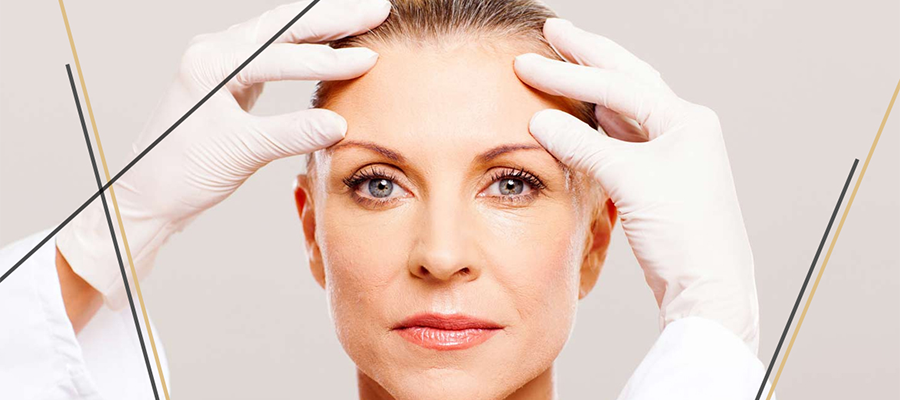
What is Forehead Filling?
Forehead filler is an aesthetic procedure performed to alleviate signs of aging on the face and provide a more youthful appearance. Fine lines, wrinkles or volume loss on the forehead may become apparent over time and may give the person an older or more tired expression. Forehead filler is a procedure performed using fillers such as hyaluronic acid or calcium hydroxyapatite, and these substances, which are injected under the skin, soften wrinkles by adding volume to the skin. Horizontal forehead lines, especially those caused by frequent use of facial expressions, can achieve a smoother and fuller appearance thanks to forehead filler. Since it does not require a surgical procedure, it offers a practical and fast solution. After the application, the forehead area has a younger, smoother and more balanced appearance.
How is forehead filling done?
The forehead filler procedure is usually a simple and quick procedure performed by a specialist doctor in a clinical setting. First, the patient is evaluated and the filler material to be used is decided. Then, the area to be applied is cleaned and a cream containing local anesthesia is applied before the procedure to increase the patient’s comfort. The filler material is injected under the wrinkles in the forehead area or into areas where volume loss is experienced with the help of fine-tipped injections. The procedure usually takes about 15-30 minutes and the patient can return to their daily lives immediately. Mild swelling, redness or bruising may occur after the procedure, but these side effects disappear within a few days. The forehead filler starts to show its effect immediately, but it may take a few days for it to settle completely.
Who Can Get Forehead Filling?
Forehead filler is usually applied to people who have significant wrinkles, lines or volume loss in the forehead area. People who have deep lines on their forehead due to signs of aging may prefer this procedure to achieve a younger and smoother appearance. In addition, people who have genetically sunken or unbalanced forehead areas can have a more balanced facial profile with filler application. Forehead lines may become more visible at an earlier age in people who use facial expressions frequently, so forehead filler can be applied not only to older age groups but also to people who want to eliminate wrinkles that occur at a young age. Forehead filler may not be recommended for pregnant women, nursing mothers and people who are prone to certain allergic reactions. In addition, people who use blood thinners should consult their doctors before the procedure.
When Should Forehead Filling Be Done?
Forehead filler can usually be applied when wrinkles in the forehead area begin to become apparent or when volume loss occurs. Since the aging process progresses differently for each individual, there is no definite age limit. While forehead lines become apparent in some people in their 30s, they can form at an earlier age in others. Applying filler when the first signs of wrinkles are seen can provide a preventive effect by preventing the formation of deeper wrinkles. If you want to have forehead filler before a special event or an important day, it should be applied at least a few weeks in advance. Because it can take a few days for the filler to fully settle and gain a natural appearance. Regular forehead filler applications delay the signs of aging and provide a younger and more dynamic facial expression.
Things to Know Before Forehead Filling
There are some important points to know before having forehead filler. First of all, the procedure must be performed by an experienced and expert doctor. Poor quality fillers or incorrect injection techniques can lead to an unnatural appearance or unwanted side effects. Blood thinners, alcohol and smoking should be avoided before the procedure, as these can increase the risk of bruising and swelling. In addition, the skin should be kept clean before the procedure and any infection or active skin problem should be reported to the doctor. Activities such as heavy exercise, sauna, hot shower should be avoided for the first 24 hours after the procedure. Since forehead filler is a temporary procedure, its effect decreases over time and usually needs to be repeated within 6-12 months. For those who want longer-lasting results, it can be combined with additional applications such as Botox.
What Procedures Are Performed in Forehead Filling?
Forehead filling is an aesthetic procedure performed to soften wrinkles on the skin, eliminate volume loss and provide a more youthful appearance. Before the procedure, the patient is evaluated and a decision is made on which filler to use. Fillers such as hyaluronic acid, calcium hydroxyapatite or polylactic acid may be preferred. Then, the area to be applied is cleaned with an antiseptic solution and a cream containing local anesthesia is applied for the patient’s comfort. The filler is injected under the skin with the help of fine-tipped needles or cannulas. During the procedure, injections are usually made to certain points to open wrinkles on the forehead and provide a more balanced appearance to the face. The procedure takes approximately 15-30 minutes and patients can return to their daily lives immediately after the procedure. Mild redness or swelling may be observed, but these effects disappear on their own within a few days.
How Long Does the Effect of Forehead Filling Last?
The effect of the forehead filler procedure may vary depending on the filler used and the person’s skin structure. While hyaluronic acid-based fillers generally last between 6 and 12 months, longer-lasting fillers such as calcium hydroxyapatite or polylactic acid can be effective between 12 and 18 months. The person’s metabolism, lifestyle, skin type and the amount of filler used are also among the factors that affect the permanence of the filler. Factors such as smoking, excessive sun exposure or fast metabolism may cause the filler to dissolve more quickly. If the forehead filler is repeated at regular intervals, the skin can gain a younger and smoother appearance in the long term.
Things to Consider to Eliminate Forehead Wrinkles
To eliminate forehead wrinkles and prevent their formation, some important points should be taken into consideration. First of all, the skin should be moisturized regularly, because dry skin wrinkles more quickly and loses its elasticity. Moisturizers containing hyaluronic acid and creams rich in antioxidants can help prevent wrinkles. Using sunscreen is also very important; the harmful UV rays of the sun cause premature aging of the skin and can increase wrinkles. Keeping facial expressions under control, especially reducing frequent eyebrow raising or frowning movements, can also prevent forehead lines from becoming more pronounced. Diet is also an important factor for skin health; drinking plenty of water, consuming foods containing omega-3 fatty acids and avoiding processed foods help maintain the elasticity of the skin. If forehead wrinkles are pronounced, these lines can be lightened with aesthetic applications such as filler or botox.
Advantages of Forehead Filling
Forehead filler is an effective method that helps eliminate wrinkles and give a younger appearance without requiring surgical intervention. One of the biggest advantages is that the procedure is fast and practical; it is usually completed in 15-30 minutes and the patient can immediately return to their daily lives. Since it is not a surgical procedure, the recovery period is very short and does not require serious aftercare. Since forehead filler provides a natural appearance, it does not completely freeze facial movements, it only softens the lines. In this way, the facial expression is preserved and the person achieves a younger, more dynamic appearance. In addition, fillers can support collagen production in the skin, allowing the skin to remain healthier and more vibrant in the long term. It can be used as an alternative to applications that temporarily limit muscle movements, such as Botox, or more effective results can be achieved by combining these applications.
How Permanent is Forehead Filling?
Forehead fillers usually last between 6 and 18 months, depending on the filler used and the person’s skin structure. While hyaluronic acid-based fillers usually dissolve within 6-12 months, calcium hydroxyapatite or polylactic acid-based fillers can be effective for a longer period of time. The permanence of the filler may vary depending on the person’s metabolism, skin care routine, lifestyle, and the technique used to apply the filler. For example, the filler may dissolve more quickly in people with very active metabolisms. It is recommended to have renewal sessions at regular intervals to maintain the effect of the filler for a long time. In addition, a healthy skin care routine and sun protection play an important role in increasing the permanence of the filler.
Forehead Filling Prices 2026
Forehead filler prices may vary depending on the clinic where the procedure is performed, the type and amount of filler used, and the experience of the specialist performing the procedure. In order to obtain up-to-date price information for 2026, it would be best to contact your preferred clinic or specialist directly.
Is Forehead Filling Permanent?
No, forehead filler is not a permanent application. Depending on the filler used and the person’s skin structure, forehead filler usually lasts between 6 and 18 months. At the end of this period, the filler is absorbed by the body and its effect decreases, so the procedure may need to be repeated.
What Materials Are Used in Forehead Filling?
The most commonly used material in forehead filler applications is hyaluronic acid. Hyaluronic acid is a substance naturally found in the skin and has a high moisture retention capacity. In addition, other fillers such as calcium hydroxyapatite or polylactic acid can also be used. The filler to be selected is determined by the patient’s needs and the doctor’s recommendations.
Is Forehead Filler Application Safe?
Yes, forehead filler is generally a safe procedure when performed by an experienced and expert doctor. Before the procedure, the patient’s health status is evaluated and the appropriate filler is selected. However, as with any medical procedure, forehead filler can have some risks and side effects.
How Does Filler Help Deep Wrinkles on the Forehead?
Deep wrinkles on the forehead can occur due to aging, facial expressions or genetic factors. Forehead filler smoothes the skin’s surface and reduces the appearance of wrinkles by injecting filler material under these deep lines. The filler fills in wrinkles by adding volume under the skin, thus achieving a younger and more dynamic appearance.
What are the Side Effects of Forehead Filling Applications?
The side effects of forehead filler applications are usually mild and temporary. After the procedure, slight swelling, redness or bruising may occur in the injection areas. These symptoms usually disappear on their own within a few days. In rare cases, complications such as infection, allergic reaction or spread of the filler to unwanted areas may occur. Therefore, it is important that the procedure is performed by an experienced specialist under sterile conditions and that the patient follows the doctor’s recommendations after the procedure.
Will There Be Edema and Swelling After Forehead Filling?
Yes, slight edema and swelling may occur after forehead filler. This is a natural reaction of the injected area and usually goes away on its own within a few days. The filler injected under the skin during the procedure may cause slight inflammation while adding volume to the tissues. Cold compresses can be applied after the procedure to minimize swelling and edema, and the care instructions recommended by the doctor should be followed. In addition, excessive facial expressions, bending the head too far forward, and heavy exercises should be avoided for the first 24 hours after the procedure. If swelling persists for a long time or becomes painful, it is recommended to consult a doctor.
What Does Filling Do to Forehead Lines?
Forehead filler softens forehead lines and makes the skin surface look smoother. Horizontal lines may form in the forehead area due to aging, facial movements or collagen loss in the skin. The filler material is injected under these lines to create volume in the skin and fill the wrinkles, giving a younger appearance. It is an effective method especially for deep and permanent wrinkles. Forehead filler can also help to achieve a healthier appearance overall by increasing the moisture retention capacity of the skin. If the forehead lines are not too deep, a more effective result can be obtained by combining it with Botox.
Does Forehead Filler Lift Eyebrows?
Forehead filler does not directly create a brow lift effect, but depending on the filler injection technique, it can make the brows look more lifted. Fillers applied to the forehead area can indirectly push the brow area upwards by providing volume to the skin. However, if a significant brow lift effect is desired, it may be more effective to apply it together with Botox. Botox helps lift the brows by relaxing the forehead muscles, while filler smoothes the skin surface and creates a youthful appearance. If a brow lift procedure is being considered, it is recommended to consult a specialist to determine which method would be more appropriate.
How Many Months Does Forehead Filling Last?
Forehead fillers usually last between 6 and 18 months. This period may vary depending on the type of filler used, the person’s metabolic rate, lifestyle and skin structure. Hyaluronic acid-based fillers usually begin to dissolve between 6 and 12 months, while fillers containing calcium hydroxyapatite or polylactic acid may be effective for a longer period of time. Repeat sessions can be performed at regular intervals to increase permanence. In addition, sun protection, healthy nutrition and attention to skin care can extend the life of the filler.
When Does Forehead Filling Set?
Although forehead filler usually shows its effect immediately, it may take a few days to a few weeks for it to fully settle and gain a natural appearance. In the first few days, the filler may feel a little hard due to slight swelling, edema or the filler not fully spreading into the tissue. However, this is temporary and the filler will integrate with the skin over time and take on a more natural appearance. The filler usually settles completely within 1 to 2 weeks. During this period, it is important to avoid heavy massages, hot steam baths and excessive facial expressions to ensure the filler settles properly.
What Should Be Done After Forehead Filling?
Aftercare after forehead filler is very important to increase the success and permanence of the procedure. Touching, massaging and excessive facial expressions should be avoided in the area where the filler was applied for the first 24 hours. In the first few days, it is necessary to avoid heavy sports activities, excessively hot environments (sauna, Turkish bath) and direct sunlight. If slight swelling or redness occurs, a cold compress can be applied. Drinking plenty of water and following a healthy diet can help the filler settle better. It is recommended to wait at least 24 hours before applying make-up to prevent possible infection risk after the procedure. If an unexpected side effect (severe pain, irregular swelling, bruising) occurs after the filler application, a doctor should definitely be consulted.